Why Your Smoke Alarm Keeps Chirping and How to Stop It: Battery Type Mismatches, Hush Mode, Hard‑Wired Resets, and End‑of‑Life Indicators Explained

If you are tired of cloudy glass and stubborn limescale, this step-by-step guide shows you how to remove hard water stains from glass shower doors using a vinegar soak, a baking soda paste, and a daily squeegee routine that actually works. Expect a clear, practical process you can repeat weekly, plus gentle tips to keep the everyday maintenance light and sustainable.
Hard water marks on glass come from mineral deposits, mainly calcium and magnesium, that cling to moisture and soap residue. Over time, these minerals etch into a hazy film that standard sprays cannot lift. The good news: combining mild acidity (vinegar) with gentle abrasion (baking soda), then locking in a quick daily squeegee ritual, restores clarity and prevents the cycle from returning.
Preparation makes the whole task faster and kinder to your bathroom surfaces. A short setup becomes your anchor habit for a smoother clean.
Always test in a discreet corner first. While glass tolerates vinegar well, avoid letting vinegar touch natural stone such as marble, travertine, or limestone. Acids can etch stone. If your shower has stone tiles or thresholds, keep the solution on the glass only and rinse promptly.
Never mix vinegar with chlorine bleach or products containing bleach. This combination can create hazardous fumes. Work with one product family at a time, and rinse between steps.
Vinegar is a mild acid that helps dissolve mineral deposits. A proper soak softens the hard water stains so they wipe away with minimal effort.
Combine equal parts distilled white vinegar and warm water in a spray bottle. Slightly warming the vinegar solution enhances its effectiveness without increasing harshness.
Fully dry the glass first. Spray the solution until the door is uniformly wet but not dripping onto stone areas. For heavy buildup, press vinegar-soaked paper towels onto the glass and cover with plastic wrap to slow evaporation.
Using a non-scratch sponge or a soft microfiber cloth, work in overlapping vertical strokes from top to bottom. Focus extra attention on edges and around handles where drips concentrate.
When the vinegar soak loosens most deposits but small rings or chalky patches remain, a baking soda paste adds gentle abrasion without scratching glass.
Combine baking soda with a small amount of warm water until it forms a thick but spreadable paste. If the stain includes soap scum, add a drop of dish soap.
Apply the paste directly onto visible spots with a damp cloth. Use light, circular motions to buff the residue. Avoid aggressive pressure to protect the glass coating if your door has one.
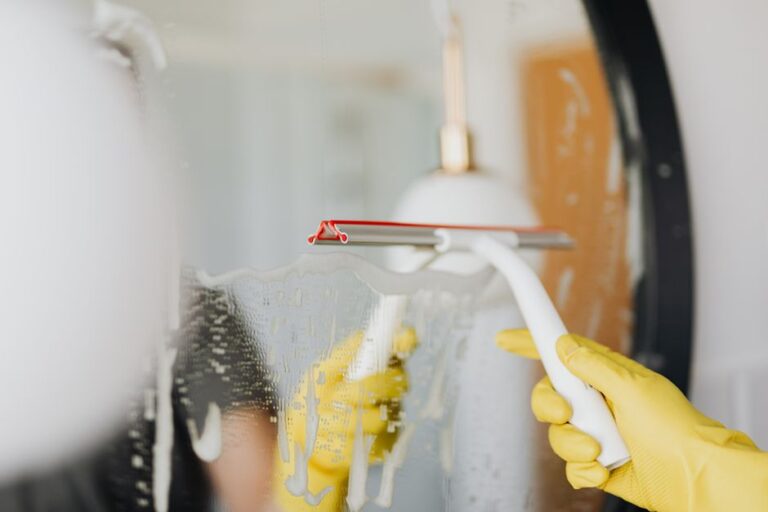
Pull a squeegee down each pane from top to bottom in slightly overlapping passes. Wipe the squeegee blade between pulls. Buff any faint streaks with a dry microfiber cloth.
Prevention is power. A consistent 60-second daily routine prevents hard water stains from reforming and keeps your weekend free for cozier moments.
Place the squeegee within easy reach and make the action the final step of every shower. Habit stacking—tying one action to another—keeps it frictionless.
Once a week, do a two-minute refresh: quick vinegar spritz, light wipe, squeegee, and dry. I fold this into my Sunday Reset because tiny, reliable rituals save energy for the rest of the week.
If results plateau or haze lingers, adjust the approach with these targeted tweaks.
Once the glass is clear, a few small upgrades extend time between deep cleans without turning maintenance into a burden.
Use this quick sequence when you want a reliable, repeatable process to remove hard water stains from glass shower doors today.
Imperfect consistency always beats perfect intensity. I once tried a hyper-structured morning routine and learned quickly that routines must respect your energy. The same goes for cleaning: shorter, kinder habits win long term.
If you feel overwhelmed, choose one anchor habit: the daily squeegee. Protect it fiercely for a week. When the door stays clear with almost no effort, motivation takes care of itself.
Vinegar is generally safe for glass. If your door has a manufacturer-applied coating, check the care guide first. Use diluted vinegar, avoid abrasive pads, and rinse thoroughly. Keep vinegar off natural stone surfaces nearby.
Yes, many commercial descalers are formulated for limescale on glass. Follow the label, ensure bathroom ventilation, and never mix products. Test in a discreet spot and confirm compatibility with any glass coating.
If thorough cleaning does not restore clarity, the glass may be etched from prolonged mineral exposure. Cleaning removes deposits but cannot reverse etching. Consider a professional opinion or, if appropriate, applying a compatible protective product to improve water beading going forward.
A 60-second squeegee after each shower significantly reduces buildup. With that habit, most households can do a quick weekly vinegar wipe and a more focused clean as needed based on water hardness and usage.
Melamine foam is a very fine abrasive. Used lightly, it can help with stubborn marks on glass, but go gently and avoid coated surfaces unless the manufacturer confirms it is safe. Always test a small area first and rinse thoroughly.